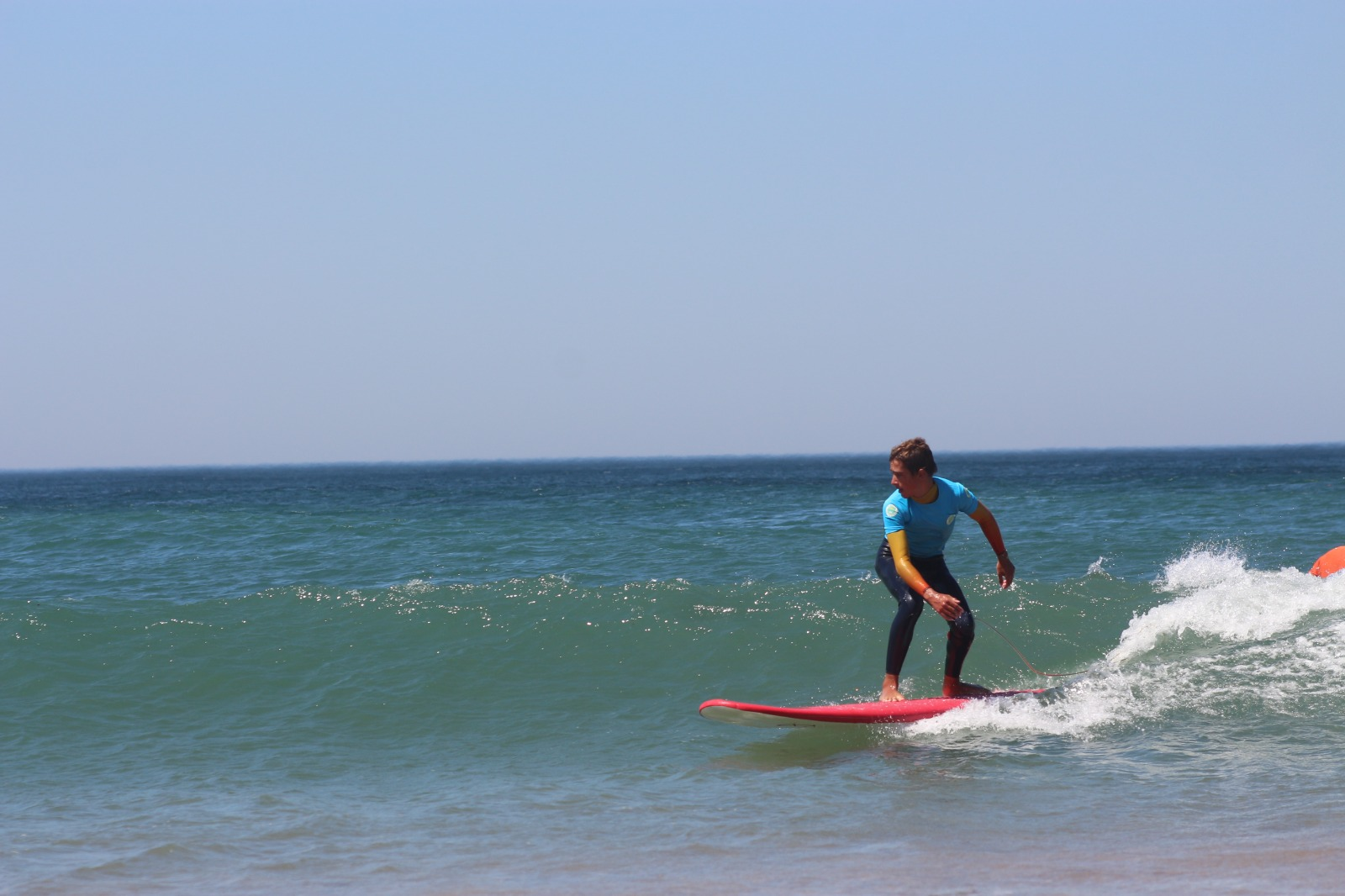
Surfing for beginners: how to start? Surfing is one of the most rewarding things you can do — and one of the most misunderstood. Most people think you need to be athletic, fearless, or grow up near the ocean. In reality, you need none of that. At Pura Vida Surfing School in Porto, we teach complete beginners every single day, from age 7 to 70. This is our step-by-step guide to starting surfing the right way.
Should You Take Surf Lessons or Teach Yourself?
Surfing for beginners is technically possible to learn alone — people did it for decades before surf schools existed. However, learning without instruction in 2026 means slower progress, more frustration, and a higher risk of developing bad habits that are hard to unlearn.
A qualified instructor shortens your learning curve significantly. At Pura Vida, we work in small groups so every student gets real feedback on every wave — not just a safety briefing on the beach. In addition, we move between beaches daily to find the best conditions for your level, which makes a bigger difference than most beginners expect.
If you are wondering whether a lesson is worth it, read our post on how much surf lessons in Porto cost — the answer might surprise you.
Is It Too Late to Start Surfing as a Beginner?
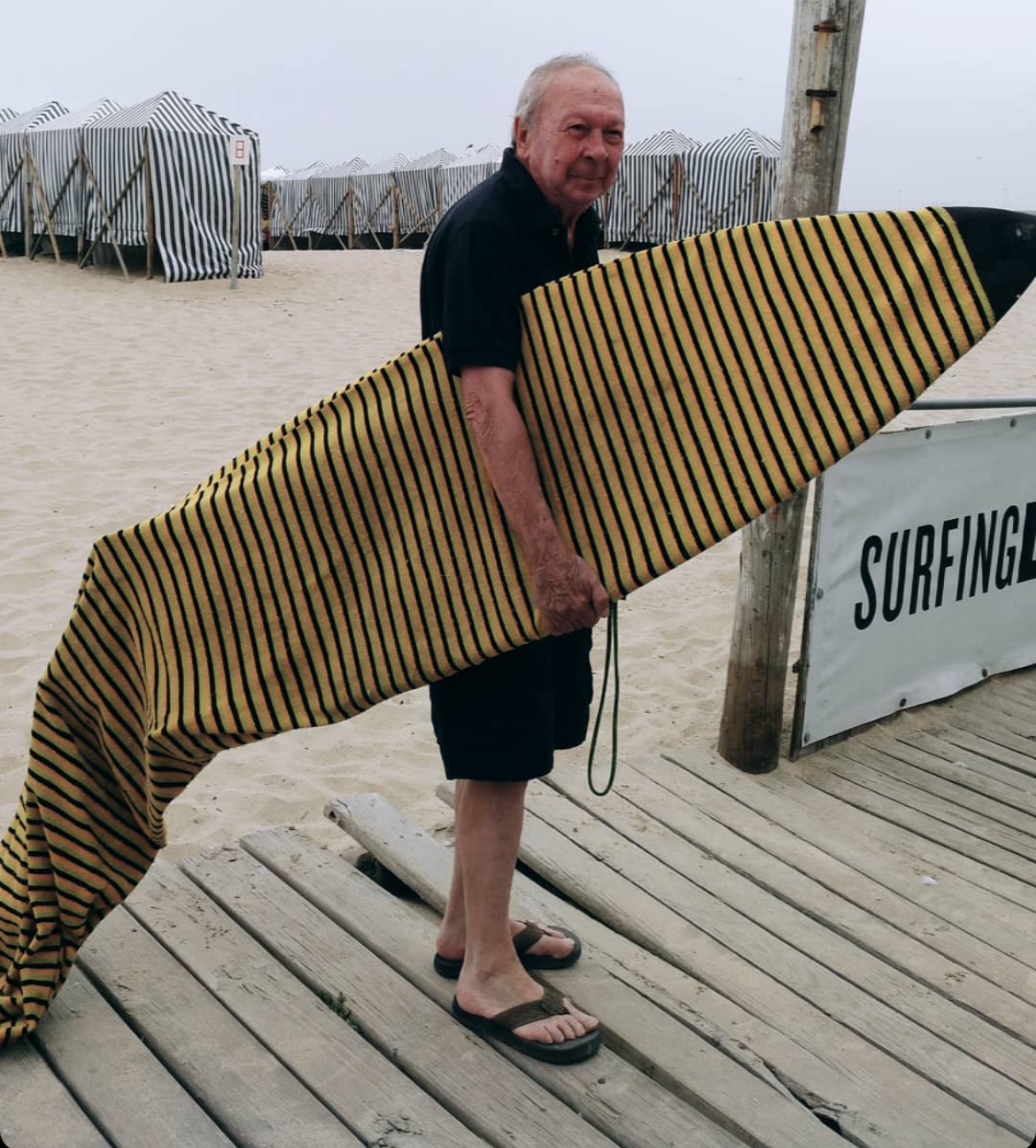
No. Surfing for beginners has no age ceiling. At Pura Vida, we give lessons from 7 to 80 years old. The ocean does not check your passport. What matters is basic comfort in the water and the willingness to fall, get back up, and try again.
“The best surfer out there is the one having the most fun.” — Duke Kahanamoku
Step by Step: How to Start Surfing as a Complete Beginner
Step 1 — Master the Pop-Up on Land First
The pop-up is the movement of going from lying flat on your board to standing up. It is, without doubt, the single most important technical skill in surfing for beginners. Before you touch the water, your instructor will have you practice it repeatedly on the sand until the movement becomes automatic.
At Pura Vida we use the 1-2-3 method — a structured pop-up sequence that gets most beginners standing on their first wave. To understand exactly what happens during your first session, read Surf Lesson Porto: Everything You Need to Know Before You Book.
Step 2 — Start in the Whitewash
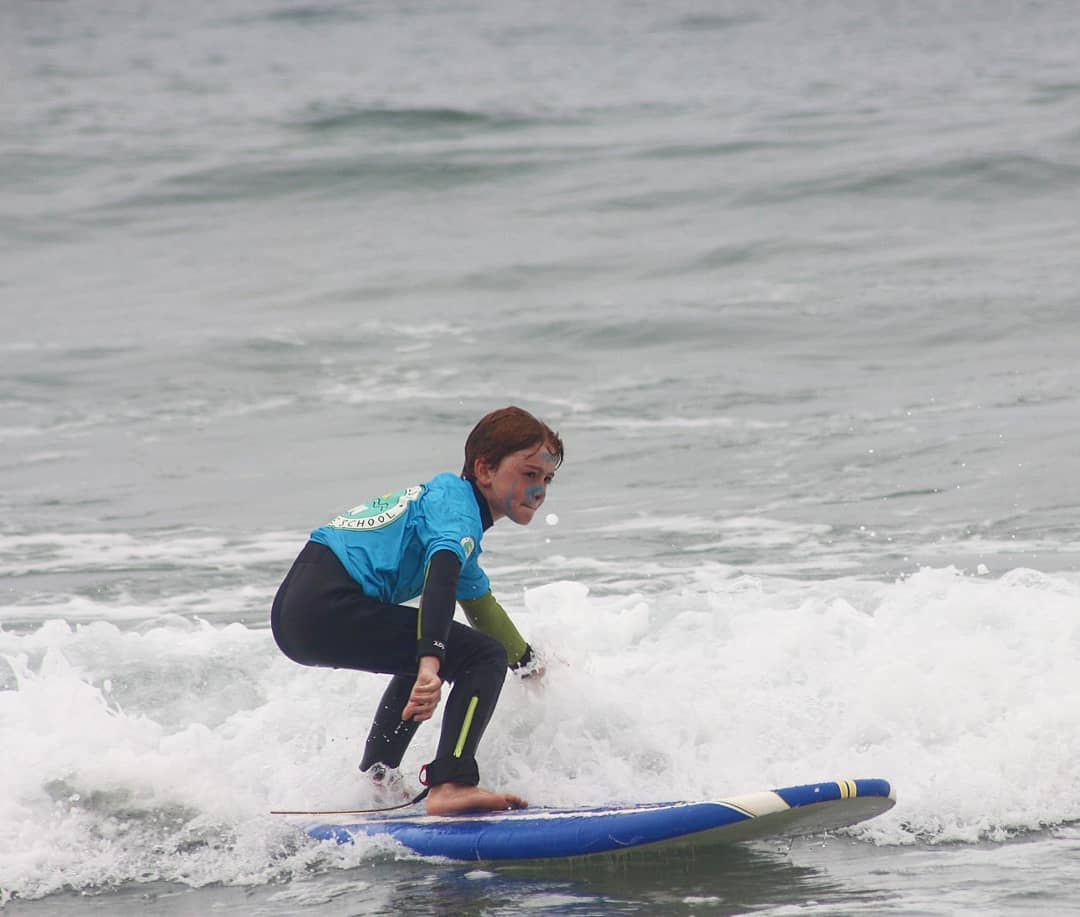
Beginner surfers do not start in open ocean. Instead, you start in the whitewash — the broken, foamy part of the wave that has already passed its peak. These waves are slower, more forgiving, and perfect for practising your pop-up and finding your balance. As a result, most people stand up for the first time within the first 30–45 minutes in the water.
Step 3 — Learn Basic Ocean Safety
Before paddling out, every beginner surfer needs to understand the essentials: how to identify rip currents, how to fall safely off a board, how to protect yourself when a wave breaks on you, and the basic rules of surf etiquette. Specifically, this means knowing who has priority on a wave and how to paddle out without disrupting other surfers. Our instructors cover all of this in the beach briefing before every session.
Step 4 — Choose the Right Equipment
Step 4 — Choose the Right Equipment
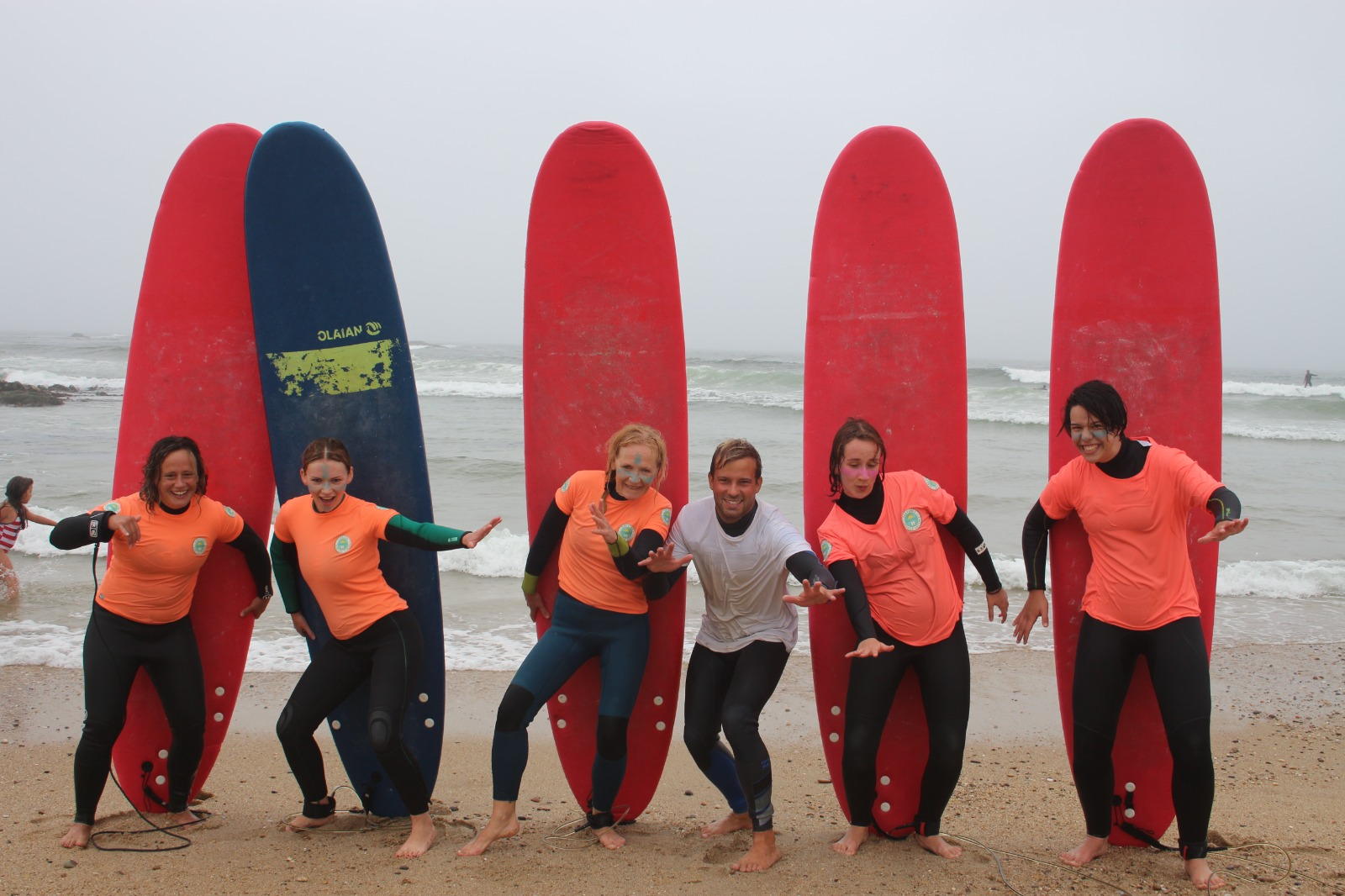
For surfing beginners, the right board is a soft-top (foam board) between 8’0 and 9’0. Wide, thick, and high-volume — these boards make paddling and catching waves far easier while you develop your technique. Furthermore, the right equipment gives you extra paddling power and helps you catch more waves, which means more practice time in the water. In Portugal, the water is cold year round, so a 4/3mm wetsuit is the minimum. Everything is provided as part of your surf lesson at Pura Vida.
Step 5 — Learn to Read Waves
Reading the ocean is a skill that takes time, but beginner surfers can start developing it from the very first session. Look for where the wave peaks, how much time passes between sets, and whether the wave breaks left, right, or closes out. Your instructor will guide your positioning until you start to feel it instinctively. For a deeper breakdown of wave reading, jump to the dedicated section below.
Pura Vida runs beginner surf lessons daily in Porto — small groups, certified instructors, daily beach selection. Book your first surf lesson → | See all lesson options
Where Should Beginner Surfers Learn to Surf in Porto?
Where Should Beginner Surfers Learn to Surf in Porto?
Surfing for beginners starts in the whitewash, the broken, foamy part of the wave that has already passed its peak. This is not the “easy version” of surfing. It is the correct starting point. Whitewash waves push the board consistently and predictably, giving you time to feel the acceleration, think about your pop-up, and find your feet before committing to open-faced waves. Without this foundation, progression stalls.
The North Atlantic coastline between Matosinhos and Espinho is one of the most underrated beginner surf stretches in Europe. Portugal’s surf reputation is built around Peniche, Ericeira, and Nazaré , but these are powerful, crowded, and unforgiving places to learn. The coast around Porto offers wave quality that matches or exceeds those destinations, with a fraction of the crowd and conditions that are far more suitable for beginner surfers.
From Matosinhos south through Gaia, Maceda, and down to Espinho and Paramos, there are kilometres of sandy beach breaks that work on almost every swell. The waves here are slow-breaking and crumbly , they peel gradually rather than throwing a lip, which gives beginner surfers the time they need. Sandy bottoms make falls safe. Consistent swell from the northwest means there is almost always something rideable.
Pura Vida selects the best beach every morning based on wind, tide, and swell size. Read our full guide to the best beaches to surf near Porto to understand what each spot offers.
The Most Common Beginner Surfing Mistakes
Even with instruction, surfing for beginners involves repeating the same mistakes. Knowing them in advance, however, puts you ahead:
1. Board too small — Starting on a shortboard is one of the most common errors. Volume and stability are what beginner surfers need above all else.
2. Looking down at the board — Your eyes should be on the horizon, not your feet. Where you look is where you go.
3. Standing up too early — Wait until the wave is pushing the board before you pop up. Otherwise, the wave passes under you and you go nowhere.
4. Tense upper body — Surfing requires loose, flexible arms and shoulders. Gripping the rails or tensing up kills your balance immediately.
5. Skipping the whitewash — Beginner surfers who try to paddle out to unbroken waves too early spend more time wiped out than riding. The whitewash is where the skill is built.
6. Fear of falling — Falling is not failure in surfing for beginners. In fact, it is the fastest way to learn. Embrace it and focus on improving your balance each time.
7. Lack of commitment — When you decide to catch a wave, commit fully. Hesitation while paddling means the wave passes without you.
8. Giving up too soon — Surfing has a slow learning curve compared to most sports. Therefore, persistence is not optional — it is the difference between surfers who improve and those who plateau.
Surfing Safety for Beginners: What You Must Know
Surfing for beginners is safe when done correctly. Here is what every first-time surfer needs to understand before entering the water:
- Always use a leash — it keeps your board attached to your ankle and prevents it from hitting other surfers
- Never put the board between you and the wave — hold it to the side when a wave breaks on you
- Rip currents — if caught in one, do not fight it. Instead, swim parallel to shore until out of the current, then return to the beach
- Respect the lineup — the surfer closest to the breaking part of the wave has priority. Never drop in on someone already riding
- Know your limits — beginner surfers should always stay in conditions appropriate to their level. Your instructor assesses this for you
Pura Vida is RNAAT 748/2022 certified — Portugal’s official certification for surf tourism activities. For more on how we keep lessons safe and progressive, read Porto Surfing: The Honest 2026 Guide.
What to Bring to Your First Surf Lesson
Almost nothing. Surf schools provide everything a beginner surfer needs:
- Surfboard (foam board appropriate for your height and weight)
- Wetsuit (4/3mm for Porto’s Atlantic water temperature)
- Leash and wax
What you bring: a towel, swimwear to wear underneath the wetsuit, sun cream, and dry clothes to change into. Transport to the beach is included with Pura Vida — no car needed. For the full logistics guide, read Surfing in Porto Without a Car.
Ready to stop reading and start surfing? Book your beginner surf lesson now → | Contact us with questions
How to Increase Your Paddle Power as a Beginner Surfer
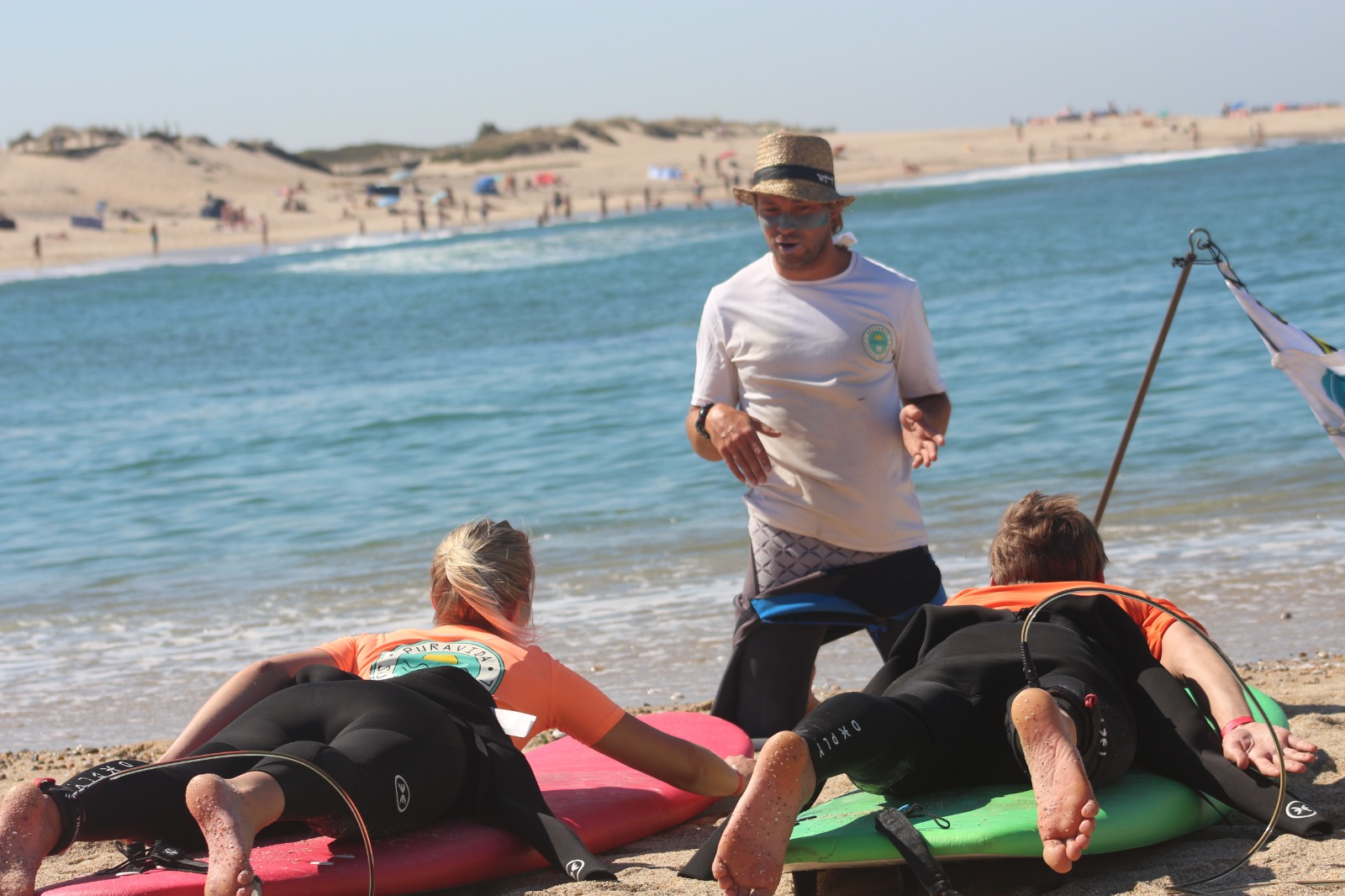
Paddling is 95% of surfing. Consequently, beginner surfers who develop paddle efficiency early progress much faster than those who focus only on standing up.
Technique
Use long, deep strokes from as far forward as possible, pulling all the way through to your hip. Moreover, the right equipment gives you extra paddling power and helps you catch more waves — which directly increases your time in the water and accelerates your learning. This is why board choice, covered in Step 4 above, matters far more than most beginners realise.
Body Position and Strength
Lie flat with your chest at the board’s centre. Too far forward and the nose dips; too far back and you create drag. In terms of strength, your core — abdominals and lower back — stabilises the board and drives each stroke. Your shoulders build endurance over time with surfing itself, although swimming and shoulder-specific exercises will accelerate that process considerably.
Follow the surfing rules and protocols
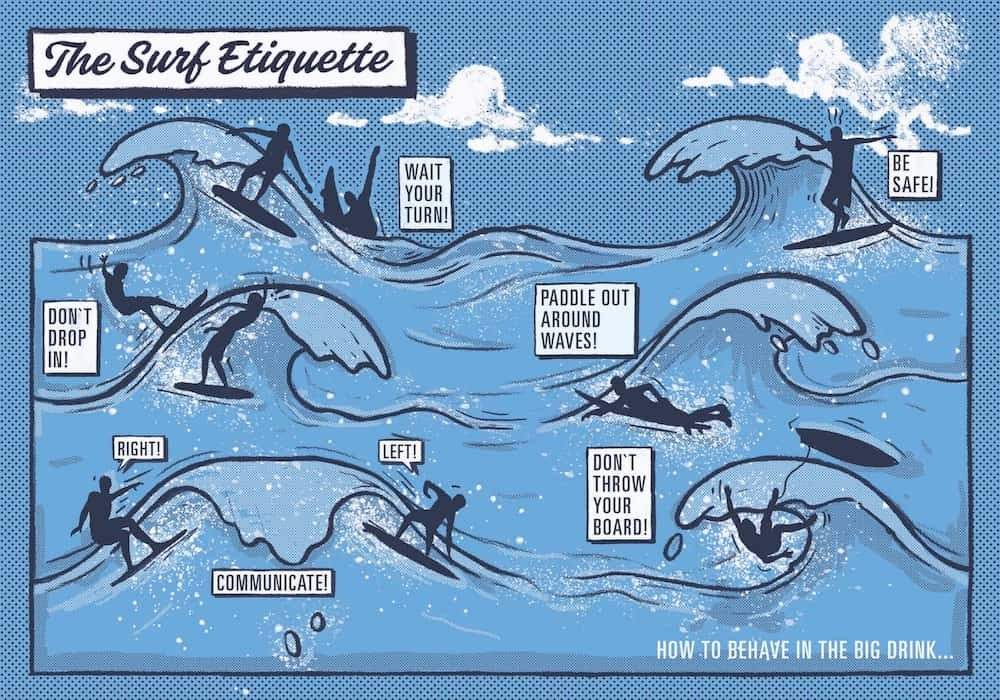
Following surfing rules is essential for a safe and enjoyable experience, both for you and for everyone else in the water. Whether you are surfing for beginners or have years of experience, these guidelines apply at every surf spot in the world.
Priority and Right of Way
The surfer closest to the breaking part of the wave has right of way. As a result, dropping in — catching a wave in front of someone already riding it — is the most serious breach of surf etiquette. Always check before you paddle for a wave.
Respect the Lineup
Wait your turn. Crowding a lineup leads to frustration and potential collisions. Share waves, communicate clearly, and use eye contact to signal your intentions to other surfers around you.
Board Control and Environment
Always maintain control of your board. A loose board is a danger to everyone nearby. Additionally, keep the beach clean — pack out whatever you bring in, and respect local wildlife and environmental regulations at every surf spot you visit.
Know Your Limits
Do not attempt waves beyond your skill level. Being honest about where you are as a beginner surfer is not weakness — it is, in fact, the foundation of a long and enjoyable surfing life.
How to Read Waves as a Beginner Surfer
Reading the ocean is a combination of knowledge, observation, and experience. Nevertheless, beginner surfers can begin developing this skill from day one.
Swell, Peaks and Sets
First, identify the direction the swell is coming from — this determines how waves will break. Then, locate the peaks (the highest breaking point of each wave) and observe the pattern of sets: how many waves arrive together, and how much time passes between them.
Wave Shape and Wind
Waves break in different ways. An A-frame breaks left and right from a central peak. A closeout breaks all at once with no rideable face. A reform breaks and then reforms further down the line. Wind also matters significantly: offshore winds (land to ocean) produce clean, well-shaped waves, while onshore winds create choppy, less predictable conditions that are harder for surfing beginners to read and manage.
Tides and Positioning
As tides change, so does the shape and behaviour of waves over sandbars and reefs. Therefore, position yourself where waves break most consistently, observe more experienced surfers, and adapt your positioning accordingly. Reading the ocean improves with every session you spend in the water — there is no shortcut, but there is a clear progression.
For a complete view of what Porto’s surf conditions look like across seasons and tide stages, read Porto Surfing: The Honest 2026 Guide From Local Instructors.
Frequently Asked Questions — Surfing for Beginners
Can a complete beginner learn to surf in one lesson? Yes. Most beginner surfers stand up and ride their first wave in a single two-hour lesson. Three to five lessons, moreover, builds real confidence in small waves. Read more in our dedicated guide: Surf Lesson Porto: Everything You Need to Know.
Is surfing hard for beginners? The first wave is easier than most people expect. Progressing beyond the basics — turns, wave reading, paddling out through larger surf — takes more time and practice. Nevertheless, surfing for beginners has a fast and rewarding start, followed by a long and equally rewarding journey.
What age can you start surfing as a beginner? At Pura Vida, we teach from 7 years old with no upper age limit. Surfing for beginners works at any age — what differs is the physical adaptation time, not the ability to learn.
Do I need to be fit to start surfing? Basic fitness helps but is not required for a first lesson. You will use your arms, shoulders, and core more than your legs. Expect to feel the paddling the next day — that is a good sign.
How cold is the water for beginner surfers in Porto? Between 14°C in winter and 20°C in late summer. A 4/3mm wetsuit is sufficient year round and is included in every Pura Vida lesson. You will not be cold.
What is the best time of year for beginner surfers in Porto? Summer (June–September) offers the smallest, most consistent waves — ideal for surfing beginners. Autumn and winter, by contrast, bring more power and size, better suited to intermediate and advanced surfers. Read the full seasonal breakdown in Porto Surfing: The Honest 2026 Guide.
How do I get to the surf lesson without a car? Transport to the beach is included with Pura Vida. Full logistics guide: Surfing in Porto Without a Car.
Are there surf lessons for groups or school trips? Yes. For hen parties, corporate team building, school trips and large groups, read our full guide to group surf lessons in Porto.
Is Porto a good place for beginner surfers compared to other destinations? Yes — and we explain exactly why in Surfing in Porto vs Lisbon: Which Is Better?
Pura Vida Surfing School — Porto. Daily beginner surf lessons. Small groups. Certified instructors. All equipment included. Book your lesson now → | Contact us with questions